
Rethinking Expat and Business Travel Medical Coverage for Today’s Global Workforce
- Written by: iPMI Global
Global mobility is no longer defined by long‑term expatriation. It is defined by movement—shorter assignments, frequent cross‑border travel, hybrid roles, and employees operating across multiple jurisdictions in rapid succession. While workforce strategies have evolved to reflect this reality, medical coverage frameworks have often lagged.
Research from Deloitte and Mercer confirms what mobility leaders already experience: globally mobile populations are becoming more diverse, less predictable, and harder to categorize. Traditional distinctions between “business traveler” and “expatriate” are increasingly artificial, particularly as hybrid work models and extended travel blur the boundaries between temporary presence and residence.
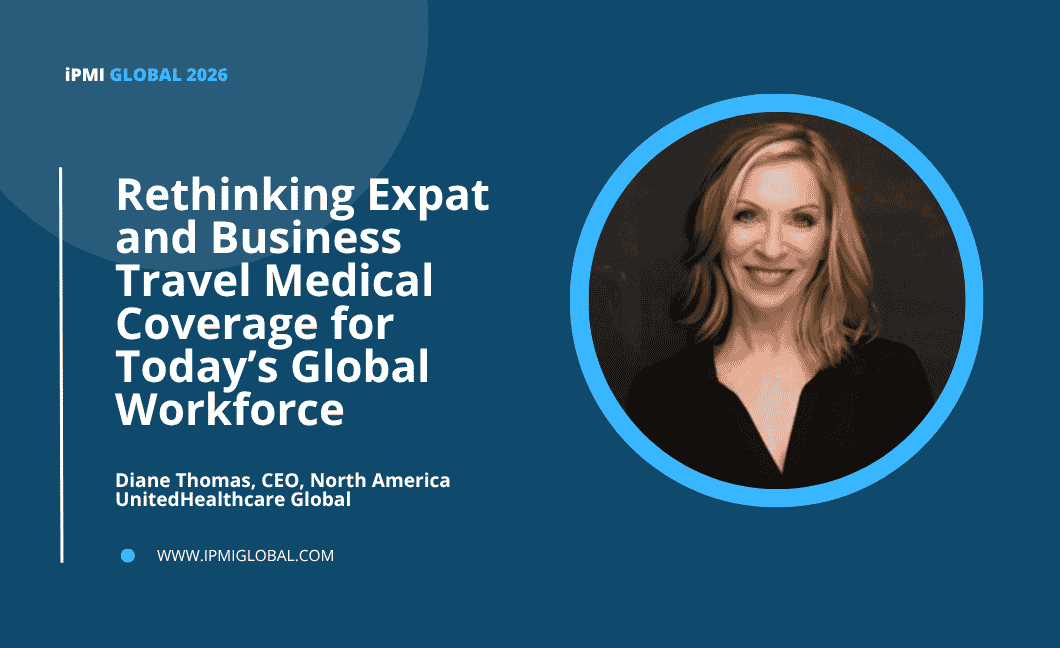
From a leadership perspective, this shift is not theoretical. Diane Thomas, CEO, UnitedHealthcare Global, has emphasized internally that mobility today is about continuity of care and support, not static assignment labels. Employees may move in and out of countries multiple times a year, extend trips informally, or work across borders without triggering a formal assignment—yet their expectations for access, support, and protection remain constant.
Speaking to iPMI Global, Diane Thomas, CEO, North America, UnitedHealthcare Global said, "Global mobility has outgrown traditional categories. Today’s workforce moves fluidly across borders, assignments, and travel models—often within the same role. Employers that continue to rely on rigid definitions of “expat” and “business traveler” risk creating gaps in access, support, and duty of care. The organizations best positioned for the future are those rethinking coverage through the lens of adaptability, continuity, and real‑world mobility."
At the same time, business travel is accelerating. According to a Global Rescue traveler safety survey, business travel increased 37% year over year, with more than two‑thirds of professionals expecting both international and domestic trips within the same period.1 Travel research from BCD and Skift shows that while trips may be shorter, stays are more variable, with professionals extending visits or working across multiple locations during a single journey.2

These patterns expose coverage gaps employers often underestimate. Policies built around fixed durations or narrow eligibility criteria may fail when travel extends unexpectedly, care is needed outside a defined host country, or dependents are involved. In many cases, employees technically have coverage—but struggle to access care due to network limitations, administrative complexity, or lack of navigation support.
Thomas also notes that this disconnect has the potential to play out in employer conversations. From her perspective, the most common failure point is not the absence of coverage, but the assumption that coverage alone equals readiness. When an incident occurs, employers quickly realize that access, coordination, and local intelligence matter as much as policy design.
The implications extend directly into duty of care. Industry bodies such as the Global Business Travel Association note that employer duty of care extends to international travel, with heightened accountability when risks are known or reasonably foreseeable. As geopolitical instability, climate disruption, and uneven healthcare infrastructure increasingly affect global travel, organizations are being held accountable not only for providing coverage, but for anticipating risk and enabling timely response.3
For HR leaders, international benefit managers, and brokers, the challenge is no longer selecting the “right” plan type. It is designing flexible, insight‑led frameworks that reflect how people actually work today—and that uphold duty of care wherever work takes them.
Sources:
1. Survey finds top traveller concerns for 2026 - The Business Travel Magazine
2. Global talent trends: The future of work and mobility
3. 20 Remote Work Statistics & Trends for 2026
