
A Definitive Blueprint for Rebuilding Core Operating Systems, Deploying Clinical AI, and Scaling Proactive Telemedicine to Navigate the 2026 Healthcare Insurance and Protection Landscape
- Written by: iPMI Global
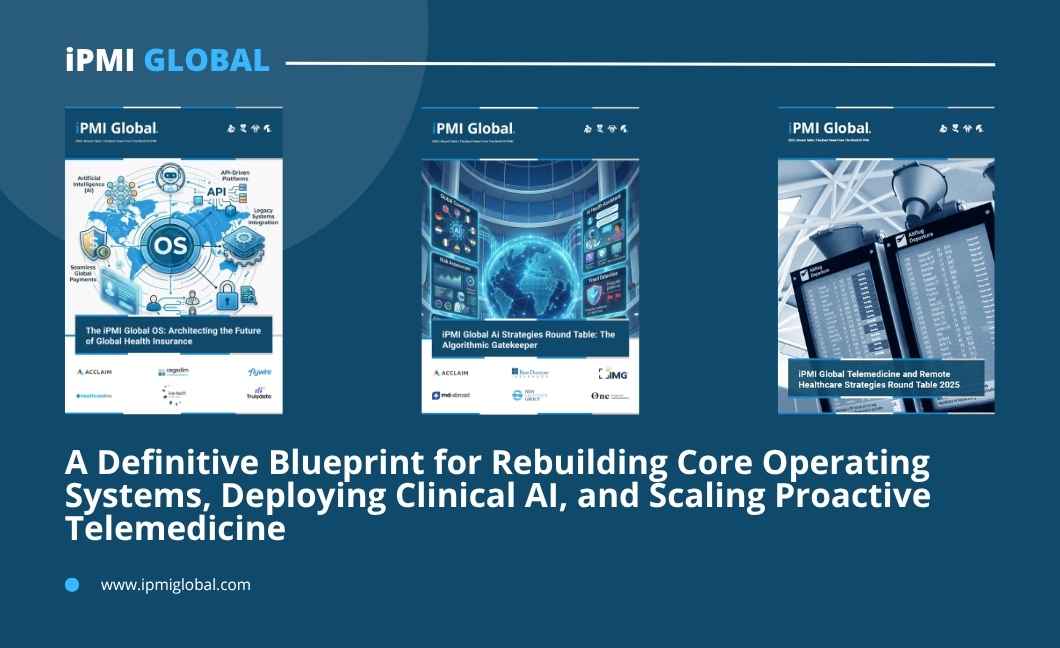
Today, iPMI Global announces the release of the "Healthcare Insurance Technology Trilogy".
In an era of unprecedented borderless mobility, the machinery of international healthcare and insurance is grinding against the friction of its own obsolescence. As legacy systems buckle under the weight of unstructured data and cross-border billing complexities, the international private medical insurance (iPMI) sector has reached a critical inflection point where incremental updates are no longer sufficient.
This report trilogy is a survival guide for insurers, brokers, and third party service providers including assistance companies, air ambulance operators and international hospitals caterting for the international patient. For firms currently grappling with medical inflation and operational inertia, these reports represent the definitive roadmap for the 2026 landscape, shifting the conversation from reactive troubleshooting to the construction of a resilient, intelligent infrastructure.
Pillar I: Architecting the Future – The iPMI Global OS
The opening instalment, "The iPMI Global OS," serves as the structural blueprint for a fundamental overhaul of the industry’s central nervous system. The report analyses the urgent transition from fragmented, siloed platforms toward a unified, integrated digital architecture.
Featuring Acclaim, Cegedim Insurance Solutions, Flywire, HealthcareLive, ICE-Tech and Trulydata.
In the high-stakes world of international care, systemic data friction is more than an IT bottleneck—it is a threat to liquidity and trust. The report argues that "rebuilding the core" is the only viable path to maintaining seamless provider relations. When cross-border payments lag and data silos persist, the risk is clear: providers lose the willingness to treat. By eliminating these financial and operational frictions, insurers can move beyond surface-level software patches to a state of architectural integrity that ensures global network stability. This physical infrastructure, however, remains inert without the intelligent logic required to govern it.
Pillar II: The Algorithmic Gatekeeper – AI and Clinical Integrity
The second pillar, "The Algorithmic Gatekeeper," synthesizes C-level insights from industry titans including New Frontier Group, Best Doctors Insurance, MDabroad, IMG, Acclaim, and One Health Insurance. This report documents the decisive shift from manual administration to automated clinical navigation, where algorithms now serve as the first line of defence and efficiency.
The report details specific technological leaps, including:
- OCR 2.0: The deployment of Large Language Models (LLMs) to transform messy, unstructured invoice data into actionable, contextualized intelligence.
- Human-in-the-Loop Safety Standards: A critical governance framework that prevents clinician deskilling by ensuring that while AI handles the volume, human expertise remains the final arbiter of complex care.
Strategically, the report frames "deliberate friction" as a counter-intuitive competitive advantage. By slowing down the clinical validation process through structured human oversight, insurers can speed up the "right" outcomes: payment accuracy and clinical defensibility. This internal logic provides the foundation for how care is delivered externally to the patient.
Pillar III: Telemedicine 2026 – From Reactive Patch to Proactive Safety Net
The final report, "Telemedicine and Remote Healthcare Strategies," provides a deep-dive analysis of the evolution of virtual care. Drawing on the expertise of AP Companies, AXA Partners US, Compass Point Assist, IMG, New Frontier Group, and HealthcareLive, the findings trace the metamorphosis of telemedicine from a temporary pandemic-era fix into a permanent, hybrid delivery model.
The strategic focus has shifted toward proactive health tracking, transforming virtual clinics into data-driven early warning systems. This transition is a financial imperative; by identifying risks before they escalate into high-cost emergency interventions, insurers can better manage the volatility of expat health. The report also provides a roadmap for navigating the labyrinth of regional licensing laws, ensuring that the 2026 delivery model is as borderless as the populations it serves. These technical advancements, while sophisticated, are ultimately anchored by the human leadership required to navigate this modernization.
Executive Perspective: Leadership Insight from iPMI Global
The industry is witnessing the end of the "cost-cutting era," where technology was viewed merely as a tool for minor margin improvements. Christopher Knight, CEO of iPMI Global, views the current technological pivot as a fundamental requirement for network survival.
"We are seeing a profound shift in how global health insurance protection is designed and delivered," says Knight. "These three round tables show that modernising legacy tech is no longer just about cutting costs; it’s about maintaining network integrity, keeping providers willing to treat, and providing the seamless experience that today's global citizens demand."
Knight’s perspective underscores that modernization has transitioned from a back-office preference to a high-stakes business necessity. For the modern insurer, the goal is to leverage technological speed without sacrificing the "human" network integrity that sustains long-term member relationships.
All three executive round table reports are now available for download via the iPMI Global Round Table Hub.
About iPMI Global
iPMI Global is the preeminent business intelligence platform for the international private medical insurance and global healthcare sectors. Operating in over 120 countries, iPMI Global empowers senior decision-makers through authoritative reporting, expert-led round tables, and real-time industry analysis. Our mission is to provide the strategic clarity required to navigate the complexities of expatriate care and the global insurance markets.


